Sweden’s ‘smoke-free’ progress puts nicotine pouch crackdown under pressure

February 7, 2026
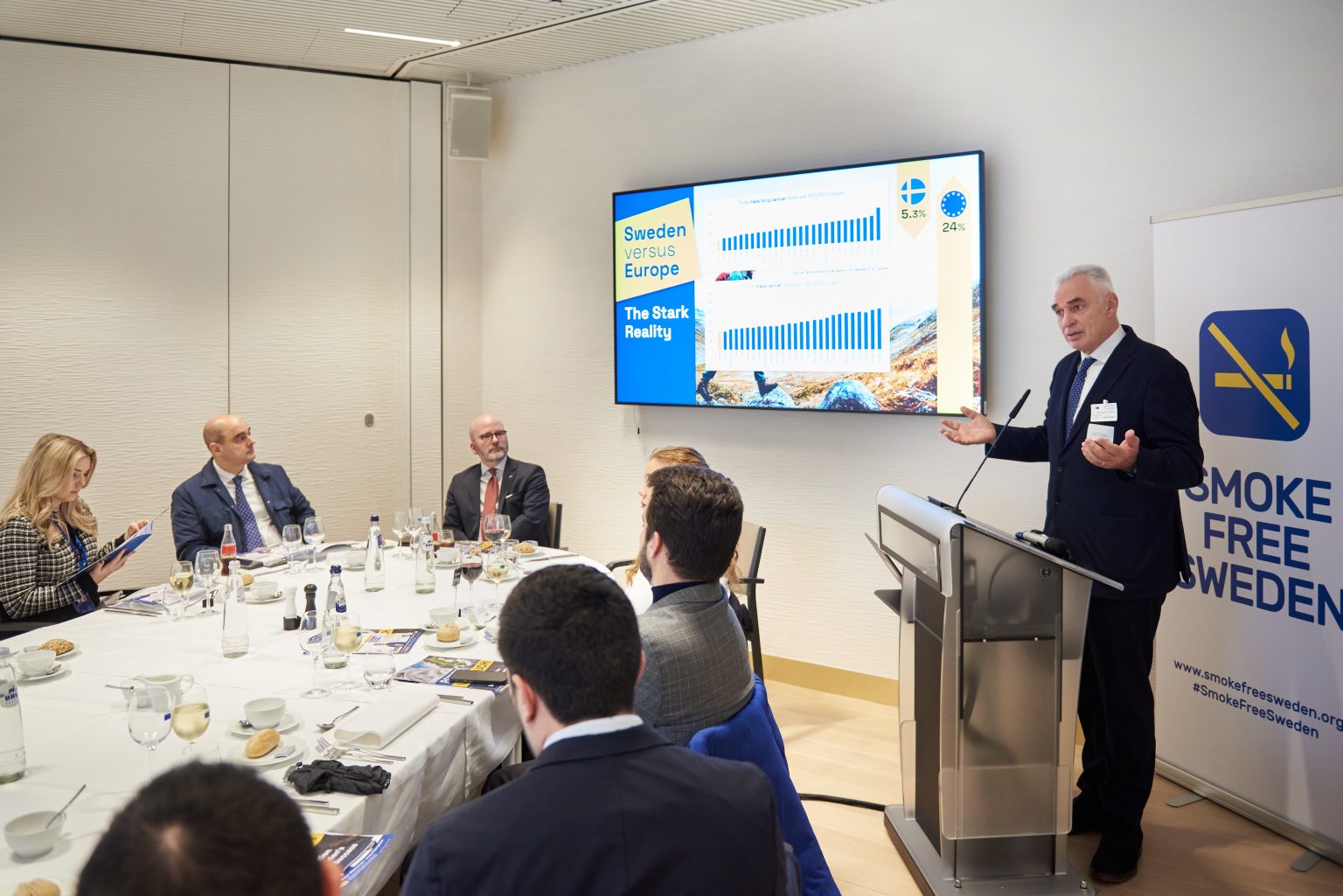
The launch of the Power in a Pouch report (Photo: Smoke Free Sweden)
Sweden’s rapid march towards smoke-free status is becoming an “inconvenient reality” for policymakers seeking to restrict safer nicotine alternatives, a Member of the European Parliament (MEP) from the country said.
Speaking at an event in the European Parliament, MEP Charlie Weimers said Sweden now offers “one of the clearest contemporary examples of harm reduction” delivering population-level public health gains.
“In the next few years, my country is set to become the first to fall below the 5% smoking rate, the standard definition of smoke-free. Harm reduction is one of the most effective tools available to public health policy,” Weimers added.
Nicotine pouches ‘supercharging’ quitting – especially for women
The intervention followed the launch of Power in a Pouch, a report presented to MEPs and stakeholders showing how oral, tobacco-free nicotine pouches have accelerated smoking decline since their introduction in Sweden in 2016.
According to the report, pouches have:
- Driven an almost 200% increase in quit rates among women
- Become the top-ranked quit aid for both men and women, outperforming all other methods
- Been rated by women as almost three times more effective than vapes and 56% more effective than nicotine gum
- Contributed to a 49% fall in smoking among women, closing a long-standing gender gap
Prof Marewa Glover, behavioural scientist and co-author of the report, said the findings were consistent across national data, surveys and lived experience. “Nicotine pouches fit modern lives. They’re clean, socially considerate and effective. And they work where other methods have failed,” she told the meeting.
Evidence versus prohibition
Health experts contrasted Sweden’s approach with more restrictive policies being considered elsewhere in Europe. By embracing harm reduction and recognising the lower risk profile of smoke-free nicotine products compared with cigarettes, Sweden has reduced its smoking rate to 5.3%, just above the smoke-free threshold.
The wider health impact has been significant. Male lung cancer deaths in Sweden are 61% lower than the EU average, while overall cancer mortality is 34% lower, according to figures cited at the event.
Prof Heino Stöver, Professor of Public Health at Frankfurt University, said the results were evidence-led rather than accidental. “Sweden succeeded by following the data, not ideology. Harm reduction works when people are given realistic alternatives to smoking and nicotine pouches are now proving to be one of the most powerful tools we have.”
Warning over proposed restrictions
Consumer and public health advocates warned that proposed bans or heavy restrictions on nicotine pouches in parts of Europe risk reversing progress, particularly for women.
Carissa During, leader of consumer group Considerate Pouchers, said women’s preferences were being ignored. “Pouches are socially considerate and free from the stigma that still surrounds smoking and vaping. Taking them away doesn’t protect women – it pushes them back towards cigarettes.”
Dr Delon Human, leader of Smoke Free Sweden and former Secretary-General of the World Medical Association, added that restricting access to safer alternatives amounted to a public health failure. “Sweden is winning the war against smoking by making lower-risk products accessible, acceptable and affordable.
“Misguided bans and barriers elsewhere are blocking access to products that save lives. That’s a public health failure. Denying women access to the quit aid that works best will cost lives.”
Last month, a leaked draft of the European Council’s updated Tobacco Excise Directive has sparked fresh anger among harm reduction advocates who claimed Brussels is still intent on taxing lower-risk nicotine alternatives in a way that could deter smokers from switching.
While the leaked version is said to reduce some of the numbers compared with earlier drafts, campaigners said it would still leave e-liquids, nicotine pouches and heated tobacco facing a tax burden high enough to erode much of their cost advantage over combustible tobacco.
Earlier, the European Commission’s newly unveiled Safe Hearts Plan has also invited criticism from harm reduction advocates who argued that it fails to properly distinguish between combustible tobacco and smoke-free nicotine products such as pouches.
EU health commissioner Olivér Várhelyi has also been accused of making inaccurate and potentially harmful remarks after he claimed that vaping, nicotine pouches and heated tobacco are “100 percent” as harmful as cigarettes.
With EU-level discussions on nicotine regulation continuing, advocates urged policymakers to look to Sweden’s experience. As Prof Glover concluded: “Policymakers face a simple choice: follow Sweden’s evidence-based success or allow preventable deaths to continue on a massive scale.”