Spice-laced vapes flooding schools and social media, study warns

September 9, 2025
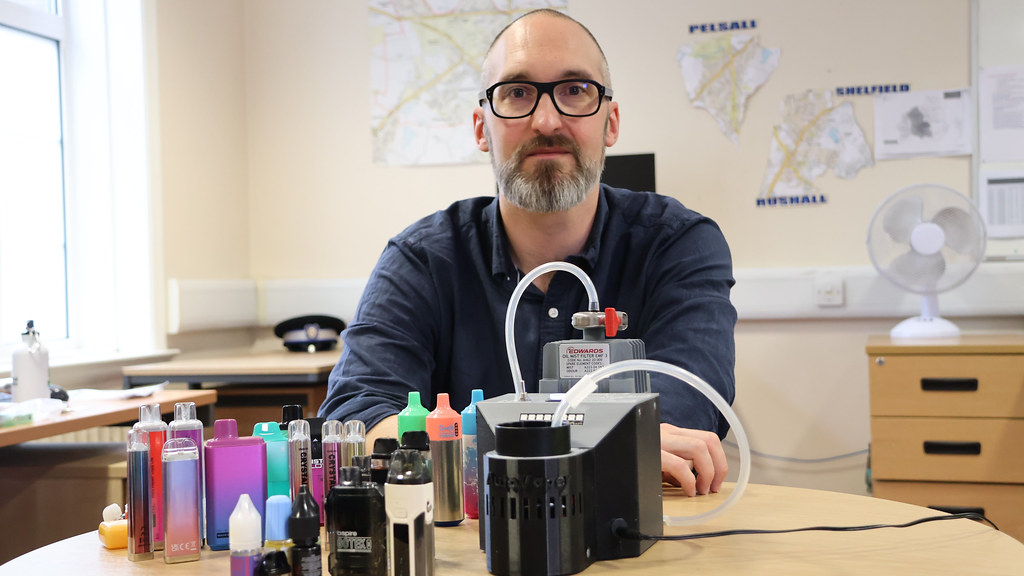
Chris Pudney and his team tested 1,923 vape products confiscated from schools in England (Photo: University of Bath)
Up to one-quarter of vapes confiscated from secondary schools in England contain the synthetic drug ‘spice’, according to new research led by Professor Chris Pudney from the University of Bath.
Researchers tested 1,923 e-cigarettes and liquids seized from 114 schools across seven regions in England. While spice was found in 13 per cent of samples overall, the figure rose to around 25 per cent in London and Lancashire. In contrast, only 1.2 per cent of the samples actually contained THC, despite many products being marketed as cannabis-derived.
The study also highlights a thriving black market for spice-laced vape liquids on social media, with TikTok and Instagram identified as major platforms fuelling availability. Between June and August 2025, researchers tracked 120 TikTok and 83 Instagram accounts advertising ‘THC’ vapes, with nearly 70 per cent of TikTok sellers and over 50 per cent of Instagram sellers actually pushing spice.
“Spice e-liquids are trivially available on social media, with apparent drug dealing on these platforms,” Professor Pudney warned.
“Young people think they’re buying a cannabis product, but instead they’re being pushed a highly addictive, cheap drug with unpredictable and serious health effects such as psychosis, seizures and heart problems.”
Spice, often sold as a low-cost substitute for THC, is highly addictive. Withdrawal symptoms have been described as being on par with heroin withdrawal, underlining the dangers to young users.
Call for online safety enforcement
The research team is urging Ofcom to make online drug sales a specific focus under the new Online Safety Act, which grants the regulator the power to fine social media companies up to £18 million or 10 per cent of global turnover.
Researchers made the major social media companies aware of this issue in March 2025 via the Drugs on Social Media Working Group chaired by Fiona Spargo-Mabbs, chief executive of the Daniel Spargo-Mabbs Foundation, a drug education charity.
Both TikTok and Meta (owner of both Facebook and Instagram) have confirmed the information has been passed to the relevant teams within their organisations. However, platforms’ response has been described as “insufficient”, with 70 per cent of flagged accounts still online as of September 2025.
“As we start another academic year, we’re very concerned that we’re going to see increased use – and increased harm from the use – of spice by teenagers, as a result of the ongoing visibility of vapes being sold as THC on their social media platforms,” Spargo-Mabbs said.
“This important research has clearly shown that until this is adequately addressed, young people will continue to be exposed to potentially significant risk from this potent substance, to an extent we haven’t seen before.”
The study, which covered the 2024–2025 academic year, builds on a 2023-2024 analysis of vapes confiscated in schools.
Commenting on the study, Jamie Strachan, operations director at VPZ, called for a ban on prefilled pods, claiming that these products are “at the very centre of this problem,”
“For too long, social media platforms and rogue online sellers have been allowed to flood the UK with illegal, unregulated vaping products. Prefilled vapes and prefilled vape pods, which are the products most often targeted at children and exploited by the black market, are at the very centre of this problem,” Strachan said.
“This is why it is vital that the government urgently prioritises the Tobacco and Vapes Bill and includes a ban on prefilled pods. Without decisive action, we risk another academic year where children continue to be targeted, exploited and harmed by dangerous products.”
He added that the explosion of illicit supply is undermining the country’s strong track record in tobacco harm reduction “through responsible, regulated vape retailing.”
“We need tougher enforcement, proper resourcing of regulators like Ofcom, and a robust Bill that clamps down on irresponsible actors while protecting adult smokers who rely on vaping as a proven quit tool,” he added.