Experts push back on ‘misleading’ vaping cancer review as industry warns of public health confusion

April 8, 2026
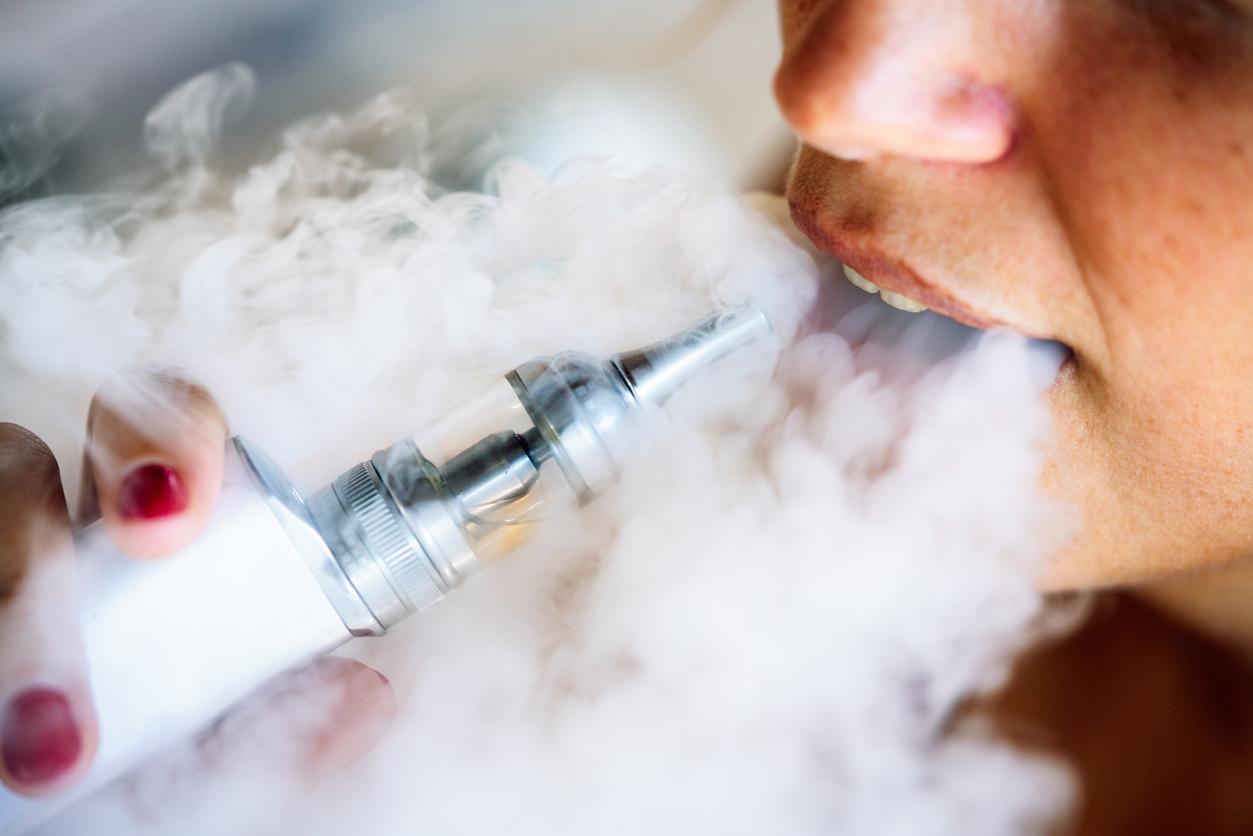
Photo: iStock
A newly published review suggesting links between nicotine vaping and cancer risk has drawn strong criticism from scientists and industry figures, who argue its conclusions risk misinforming smokers and undermining harm reduction efforts.
The paper, titled ‘The carcinogenicity of e-cigarettes: a qualitative risk assessment’ and published in Carcinogenesis, has been described by multiple experts as methodologically weak and prone to overinterpretation.
Dr Marina Murphy, senior director of scientific affairs at Haypp Group and a member of the independent Vape Verify panel, said the review relies heavily on low-quality evidence, including laboratory and animal studies conducted under unrealistic conditions.
“This is largely a qualitative review drawing heavily on low-quality studies,” she said. “Such studies may demonstrate biological plausibility, but plausibility alone is a weak basis for public health alarm.”
Murphy added that findings from cell-based experiments are often misrepresented. “If I were to pour coffee on cells in a lab, they will die. Should I conclude that coffee will kill me? The answer is obviously No!”
The UK Vaping Industry Association (UKVIA) also criticised the review, warning that its conclusions contradict established public health guidance. Director general John Dunne pointed to the continued endorsement of vaping as a smoking cessation tool by major health bodies.
“The lead author of this review is quoted as saying it shows vaping is ‘not an alternative to smoking…to anything in the context of being safer.’ But tell that to the millions of adults using vaping to cut down or quit smoking – which still claims 80,000 lives every year in the UK,” Dunne said.
He added that organisations including the NHS, the Royal College of Physicians and the Office for Health Improvement and Disparities all maintain that vaping, while not risk-free, is significantly less harmful than smoking. Cancer Research UK has also stated there is “no good evidence” that vaping causes cancer.
Academic experts echoed these concerns. Professor Peter Hajek of Queen Mary University London described the review’s conclusions as “misleading”, highlighting that it fails to compare vaping with smoking and instead treats any detection of potentially harmful chemicals as evidence of carcinogenicity, regardless of dose.
“What matters is the comparison with smoking,” Hajek said. “The crucial bit of information that the review omits is that vaping exposes users to only a very small fraction of some of the carcinogens in tobacco smoke, and to none at all of the rest.”
Professor Lion Shahab of University College London said the paper does not follow standard systematic review practices, lacks transparency in study selection, and relies on subjective interpretation of evidence.
“This review does not offer a ‘smoking gun’ that e-cigarettes cause oral or lung cancer, nor does it make an attempt at quantifying this risk, which is unsurprising because the evidence is simply not there to allow for such an estimation,” Shahab said.
Dr Baptiste Leurent, a medical statistician at UCL, suggested the paper is better viewed as an opinion piece than new research, while others criticised its failure to quantify real-world cancer risk.
“This work does not meet methodological expectations for evidence synthesis and consequently, its conclusions should be treated with circumspection. Both Cochrane and Campbell provide detailed methodological requirements for robust evidence synthesis – none of which is met by this work,” Dr Gavin Stewart, Campbell Collaboration Methods group co-chair and statistical editor, and reader in Interdisciplinary Evidence Synthesis at Newcastle University, said.
Despite acknowledging that vaping aerosols can contain potentially harmful substances, experts consistently emphasised that current evidence does not demonstrate a causal link between vaping and cancer in humans, nor does it suggest risks comparable to smoking.
Hajek warned that such studies could have unintended consequences. “Misinforming smokers risks discouraging them from using e-cigarettes, which are one of the most effective methods that exist to help people stop smoking. Switching from smoking to vaping removes the major source of all smoking related diseases, including cancer,” he said.
Dunne added: “It’s exactly this kind of confusion that threatens the nation’s smokefree future.”
The debate comes as the industry continues to promote harm reduction messaging through campaigns such as VApril, aimed at improving public understanding of vaping’s role in smoking cessation.